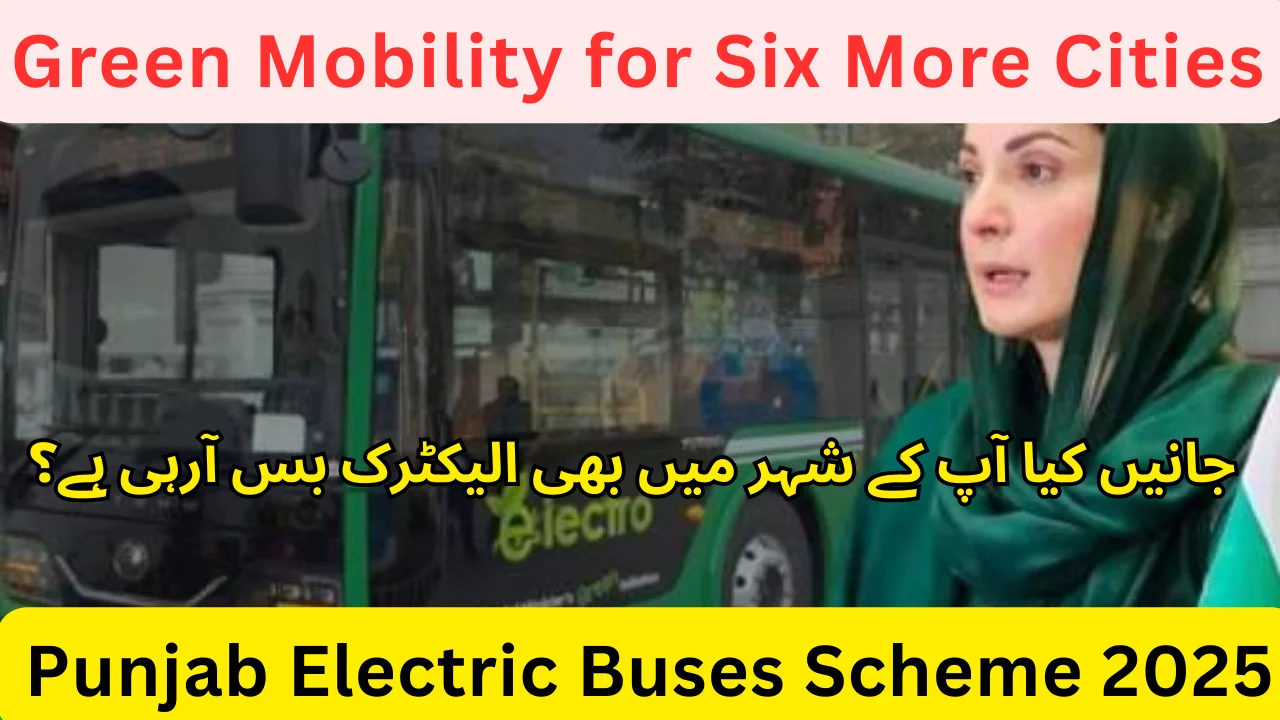
CM Punjab Electric Buses Scheme 2025 – Green Mobility for Six More Cities
Punjab is setting the stage for a major transformation in public transport with the Electric Buses Scheme 2025, aimed at introducing a fleet of modern, eco-friendly buses in six major cities. This initiative is part of the Green Mobility Drive by the provincial government, under which electric buses will replace or supplement existing diesel fleets to reduce emissions, improve commuter experience, and elevate the standard of urban transit.
Key Features of the Electric Buses Scheme
- A total of 1,500 electric buses will be procured and deployed across selected cities in phases.
- In the first phase, about 380 buses will start operations in Lahore and Gujranwala. Subsequent phases will cover six additional cities, including Sargodha, Sheikhupura, Sialkot, Gujrat, Rahim Yar Khan, and Dera Ghazi Khan.
- The transport department is tasked with planning the required infrastructure: dedicated bus lanes, charging stations, giving priority to route planning and depot readiness.
- To ensure coverage, new routes (Red, Yellow, Orange lines) are being mapped out, with attention to busy roads and public need.
- The government aims to complete the first phase by June (of the given timeline), with full rollout staggered thereafter.
Benefits of Introducing Electric Buses
The scheme promises multiple long-term advantages:
- Environmental Gains
Electric buses produce zero tailpipe emissions, cutting down urban air pollution and reducing greenhouse gas output. - Cost Savings Over Time
Though upfront cost and infrastructure investment are high, operational costs (fuel, maintenance) of electric buses are lower than diesel buses over their lifespan. - Improved Public Transport Experience
Features like quieter rides, modern amenities, smoother operations, and cleaner vehicles will enhance public satisfaction and user comfort. - Energy Independence & Efficiency
Reducing dependency on imported fuel and shifting to electric transport helps stabilize energy expenditure and aligns with national energy goals. - Health and Safety
With reduced air pollution, respiratory illnesses and related healthcare burdens may decrease. Also, modern buses will likely have safety features aligned with international practices.
Who Benefits Most
- Daily commuters in the selected six cities will see better transport services.
- Low income people and students, who rely on public transport daily, will get cleaner, more reliable rides.
- Environmentally conscious citizens will benefit from reduced pollution and improved urban air quality.
- Future generation as infrastructure and technology groundwork are laid for further green transit.
Implementation Plan & Infrastructure Needs
For the scheme to succeed, several pieces must fall in place:
- Procurement process for the buses must be transparent and competitive.
- Charging stations must be set up in sufficient number and strategically located.
- Deployment of bus depots and maintenance facilities with access to electricity and technical support.
- Training for drivers and technical staff on electric vehicle operations.
- Traffic route planning, dedicated lanes, and adjustments to roads where needed.
Government has issued directives to fast-track route maps, charging infrastructure, and required facilities especially in Lahore, Gujranwala, and upcoming cities.
Challenges and Risk Factors
No large project is without risks. Key challenges include:
- Capital investment: Buying electric buses and building infrastructure requires large upfront funding.
- Power supply and grid stability: Electric buses and chargers need reliable electricity; load shedding or irregular power could hamper operations.
- Maintenance and repair expertise: Electric buses have different technical requirements; the supply chain for spare parts and trained staff must be established.
- Public acceptance: Transition from diesel buses may face resistance due to initial discomfort, perceived costs, or route changes.
- Route planning delays: Delays in route approvals, road modifications or land acquisition for depots/charging stations could slow rollout.
See Also Maryam Nawaz Green Credit Program 2025 – How to Earn Cash Up to Rs.100,000 by Going Green
How Citizens Can Prepare and Participate
- Stay informed about route changes and new bus lines in your city.
- If required, apply for transport cards or digital frequently used passes for smoother adoption.
- Monitor announcements from local transport authorities to know when electric buses will start on your routes.
- Provide feedback about issues like bus frequency, charging infrastructure, or performance to help authorities refine the implementation.
Conclusion
The Electric Buses Scheme 2025 in Punjab is a bold move toward a greener, cleaner, more sustainable urban transport system. With its phased rollout across major cities, dedicated infrastructure plans, and high expectations for environmental impact and public benefit, this program could redefine commuting in Punjab. As challenges are addressed and implementation progresses, this scheme holds promise for improving quality of life, reducing pollution, and modernizing public transportation to match international standards.
Frequently Asked Questions (FAQs)
Q1: How many cities will be included in the electric bus scheme?
Six major cities will be part of the scheme after the first phase, including Sargodha, Sheikhupura, Sialkot, Gujrat, Rahim Yar Khan, and Dera Ghazi Khan.
Q2: When will the first electric buses start operating?
The first phase with 380 buses is aimed to begin in Lahore and Gujranwala by around the middle of the rollout year.
Q3: Will there be charging stations for the electric buses?
Yes, setting up charging infrastructure is an essential part of the plan. These stations will be established in key locations and bus depots.
Q4: Who approved the scheme?
The Chief Minister of Punjab has approved the scheme in principle, and relevant transport authorities are working on the execution.
Q5: Is this scheme part of the Green Mobility initiative?
Yes, it is part of a larger Green Mobility Drive to reduce transport emissions and modernize public transport systems.
Q6: What happens to current diesel buses?
Some may be phased out or supplemented by electric buses over time; exact plans depend on route demand and resources.
Q7: Will the fares change for commuters using electric buses?
Officials aim to keep fares affordable; however, operational and infrastructure costs may influence fare policies.
Q8: Are there benefits for students or low-income groups under this scheme?
Likely yes; public transport improvements often provide better access and reduced costs for those groups.
Q9: Can we expect similar schemes in smaller cities or towns?
If this rollout is successful, expansion to smaller cities could be possible in future phases.
Q10: How can I track updates about this scheme?
Watch announcements from Punjab Transport Department, news outlets, or local government press releases for updates.